Saturday, 11 April 2020

Day 2 - Problem Solving Skill


Picture credit - SkippRichard

What is Problem-Solving Skill?

Problem-Solving Skill is the ability to determine the source of a problem and find an effective solution.
How to improve Problem-Solving Skill?
Set a goal to become a go-to person by mastering the art and science of Problem-Solving. 
Follow the LAST model to build your personal brand as a Guru of Problem-Solving. 
  1. Learn - Invest time in learning different models/ techniques of Problem-Solving 
  2. Apply - 
    1. Identify a model suitable to you
    2. Create a template to document the flow of the process
    3. Find opportunities to use the selected method/ template
    4. Maintain record/ process flow of every problem solving exercise you did
    5. Maintain notes of your thoughts/ insights/ failures/ challenges…. to be used for sharing/ training others
  3. Share - Share the insights captured in step 2 above in a planned manner (social media posts, blogs, videos, study notes…)
  4. Train - Generate opportunities to train your peers and team members so that, over time, your organization benefits from your efforts

My learning for the day

What is 5 Whys Analysis

5 Whys Analysis is a method to find the root of a problem. This method was invented by Sakichi Toyoda (1867 – 1930) (Toyota founder Kiichiro Toyoda’s father).
5 Whys in simple language is asking ‘why’ five times so as to reach the real root cause.
Here’s a good example to understand what 5 whys is - 
Problem - Delivery to customers of a tyre supply company was normally happening in 24 hours. Suddenly the company finds the delivery is happening only after 3 days
Here’s how they used 5 Whys - 
First why - Not able to deliver tyres within 24 hours – Why?
Second why - Supplier has insufficient stock – Why?
Third why - Supplier depends on exporter; cargo boats are delayed – Why?
Fourth why - The cargo boats are waiting for more freight customers to fill their boats – Why?
Fifth why - Fewer freight customers for the cargo ships – Why?
The tyre supply company has identified the real reason - Cargo ships are finding it difficult to get customers
Now they can find a suitable solution from a wide range of ideas starting from Closing the tyre business, setting expectations with customers, buying tyres from some other source, using some other transporting means…...-  

Beauty of this method

This forces people to think really deeply rather than giving flimsy excuses or barking at the wrong tree.
There is a simple defined process to implement 5 whys - 
  1. Invite all impacted stakeholders
  2. Select a meeting leader
  3. Ask ‘why’ five times
  4. Assign responsibilities for solutions
  5. Communicate results of the meeting/ actions immediately after the meeting
Enjoy some great examples from Mark Paradies here
Purpose of this document
I took a 66 day challenge to study Life Skills last year (10 April 2019). To my astonishment, I succeeded in studying for 66 days one skill a day. 
My objectives of learning these skills were - To strengthen my mind to face life’s challenges with ease, To use these skills in my worklife for a better performance, To use these skills in my personal life for enriching my relationships, To open new possibilities to surprise myself. 
This is my next 66 day challenge (from 10 April 2020) - To share my Life Skills learning with my social media friends. 
I pray that my toil helps you in your success journey.

What are Life Skills?

UNICEF defines Life skills as - psychosocial abilities for adaptive and positive behaviour that enable individuals to deal effectively with the demands and challenges of everyday life. They are loosely grouped into three  broad categories of skills
  • cognitive skills for analyzing and using information, 
  • personal skills for developing personal agency and managing oneself, 
  • inter-personal skills for communicating and interacting effectively with others.

Which LifeSkills are covered?

The World Health Organisation identified these basic areas of life skills that are relevant across cultures: 
  1. Decision-making
  2. Problem-solving
  3. creative thinking
  4. critical thinking
  5. communication
  6. interpersonal skills
  7. Self-awareness
  8. Empathy
  9. coping with emotions
  10. coping with stress.

Some trivia

‘Life skills’ was never part of the school curriculum. WHO/ UNESCO mandated academia to teach these skills in all schools across the globe in 1993.
Different countries educate their children in these skills with different objectives

  • Zimbabwe and Thailand - prevention of HIV/AIDS
  • Mexico - prevention of adolescent pregnancy
  • United Kingdom - child abuse prevention
  • USA - prevention of substance abuse and violence
  • South Africa and Colombia - positive socialization of children.

XX

128 words - 1 minute reading - Flesch–Kincaid readability score 70-60 - English

The 5 Whys Analysis, pioneered by Sakichi Toyoda, aims to uncover the root cause of a problem through iterative questioning.

By repeatedly asking "why," the underlying issue is revealed, facilitating effective problem-solving.

Illustratively, consider a tyre supply company facing delivery delays. Through the 5 Whys method:

  1. Initial inquiry: Why can't tyres be delivered within 24 hours?
  2. Insufficient stock from the supplier.
  3. Supplier relies on exporters; cargo boats are delayed.
  4. Cargo boats wait for more freight customers.
  5. Fewer freight customers for cargo ships.
The core issue emerges: Cargo ships struggle to secure customers. This method enables diverse solutions like adjusting business operations or exploring alternative suppliers.

The process encourages profound reflection, discouraging superficial explanations. Implementation involves stakeholder involvement, leadership, iterative questioning, solution allocation, and prompt communication of outcomes.


Day 1 - Decision-Making Skill


Picture credit - DeekshaLearning

What is Decision-Making Skill?

Decision-Making Skill is the ability to use a decision making process/ technique to arrive at a decision.

How to improve Decision-Making Skill?

Set a goal to become a go-to person by mastering the art and science of Decision-Making. 
Follow the LAST model to build your personal brand as a Guru of Decision-Making. 
  1. Learn - Invest time in learning different models/ techniques of Decision-Making 
  2. Apply - 
    1. Identify a model suitable to you
    2. Create a template to document the flow of the process
    3. Find opportunities to use the selected method/ template
    4. Maintain record/ process flow of every decision you make
    5. Maintain notes of your thoughts/ insights/ failures/ challenges…. to be used for sharing/ training others
  3. Share - Share the insights captured in step 2 above in a planned manner (social media posts, blogs, videos, study notes…)
  4. Train - Generate opportunities to train your peers and team members so that, over time, your organization benefits from your efforts

My learning for the day

Author - Content team of Mindtools

Challenges when taking decisions

  • Uncertainty – Many of the facts may be unknown.
  • Complexity – There can be many, interrelated factors to consider.
  • High-risk consequences – The impact of the decision may be significant.
  • Alternatives – There may be various alternatives, each with its own set of uncertainties and consequences
  • Interpersonal issues – You need to predict how different people will react.

A Systematic Approach for Making Decisions

A logical and ordered process can help you to ensure that you address all of the critical elements needed for a successful outcome. These are great steps to follow - 
  1. Create an appropriate environment by documenting
    1. List of stakeholders
    2. Method/ model to be used for decision making
    3. Data sources to be used for taking decisions
    4. Milestone/ communication plan so that all stakeholders are on a single page
  2. Investigate the situation
    1. Analyse the problem using 5 Whys, Fishbone….
    2. Define problem statement in a scientific manner (eg using IRCP model)
  3. Generate alternatives
  4. Evaluate and choose the best fit option with available inputs of the time (including execution plan)
  5. Communicate the decision (including the supporting documentation)
  6. Maintain the documentation for future use 

Purpose of this document

I took a 66 day challenge to study Life Skills last year (10 April 2019). To my astonishment, I succeeded in studying for 66 days one skill a day. 
My objectives of learning these skills were - To strengthen my mind to face life’s challenges with ease, To use these skills in my worklife for a better performance, To use these skills in my personal life for enriching my relationships, To open new possibilities to surprise myself. 
This is my next 66 day challenge (from 10 April 2020) - To share my Life Skills learning with my social media friends. 
I pray that my toil helps you in your success journey.

What are Life Skills?

UNICEF defines Life skills as - psychosocial abilities for adaptive and positive behaviour that enable individuals to deal effectively with the demands and challenges of everyday life. They are loosely grouped into three  broad categories of skills
  • cognitive skills for analyzing and using information,
  • personal skills for developing personal agency and managing oneself, 
  • inter-personal skills for communicating and interacting effectively with others.

Which LifeSkills are covered?

The World Health Organisation identified these basic areas of life skills that are relevant across cultures: 
  1. Decision-making
  2. Problem-solving
  3. creative thinking
  4. critical thinking
  5. communication
  6. interpersonal skills
  7. Self-awareness
  8. Empathy
  9. coping with emotions
  10. coping with stress.

Some trivia

‘Life skills’ was never part of the school curriculum. WHO/ UNESCO mandated academia to teach these skills in all schools across the globe in 1993.
Different countries educate their children in these skills with different objectives
  • Zimbabwe and Thailand - prevention of HIV/AIDS
  • Mexico - prevention of adolescent pregnancy
  • United Kingdom - child abuse prevention
  • USA - prevention of substance abuse and violence
  • South Africa and Colombia - positive socialization of children.
XX

128 words - 1 minute reading - Flesch–Kincaid readability score 70-60 - English

Decision-Making Skill is the ability to use a decision making process or technique to arrive at a decision.

There are typically six steps is the decision making process.

Step 1 - List down all stakeholders who will be impacted by the decision.

Choose the method that you propose to use. There are many decision making models such as the Vroom-Yetton model, Rational decision-making model etc. to choose from.

Identify the data that will be used for taking decisions.

Decide how to communicate the decision to the stakeholders.

Step 2 - This stage is called the situation investigation. Here are the steps for situation investigation.

Analyse the problem using 5Whys, Fishbone analysis etc.

Define the problem in a scientific manner. The IRCP method is a good way to define a problem. IRCP is Ideal State, Reality, Consequences and Proposal.

Step 3 - Generate alternatives to choose from using techniques such as brainstorming, decision tree etc..

Step 4 - Assess the alternatives using cost benefit analysis, risk analysis etc. and choose the most suitable alternative.

Step 5 - Communicate the decision to the stakeholders giving all the necessary information about the decision.

Step 6 - Maintain the records for future reference.

We face a few challenges when making decisions. Some of the common challenges are as below.

The first challenge is about the complexities involved. There can be many interrelated factors to consider. This makes the decision making complex.

The second challenge is the impact of the decision. If the impact of the decision is huge, we feel a lot of stress and cloud our thoughts.

Then there could be a problem of plenty, what we call as abundance syndrome. When there are too many alternatives to choose from, we do not know what to choose.

Also, there could be many vested interests that may come in the way or some interpersonal issues may crop up. All these may impact the objectivity in decision making.

xx

Hindi 


Tuesday, 5 June 2018

Collaborative painting - Koshy and family


31 March 2018


xxx

The original painting
Paul Gaugin - Tahitian Landscape, 1891


Thursday, 14 January 2016

Sixer on the first ball of a new inning

I hit a sixer on the first ball of my new inning. This is how.

My sixtieth birthday was approaching. Everyone around wanted it to be a grand event. They gave me a lot of suggestions. I had to comply, since these came from my dear ones. I fulfilled wishes of all of them, of course by twisting those suggestions to suit my plan.

Some wanted me to travel. I drove 800 kms on my birthday to meet some amazing farmer inventors.
Some wished me to go to a temple and perform pooja - I went to two temples of my choice - IIMA (Indian Institute of Management, Ahmedabad) and Gandhi Ashram.

Some wanted me to enjoy exotic food - I ate pani puris with eight flavours of pani!

My mother urged me to read scriptures on my birthday. I did.

My wife asked me to do something for the poor and for stray animals. Well, I met only part of her requirements – I gave a big tip to Prakash, the auto guy, who was my guide throughout my stay in Ahmadabad. The stray animals bit is pending.

When I started planning for my birthday, my naïve wish was to spend a day in Gaya where Buddha attained enlightenment and also to visit a colleague who had started an NGO for women near Ranchi. Alas, my friend turned it down saying the workshop was closed because of vacations.

My next choice was to meet Prof Anil Gupta, an amazing activist bringing visibility to illiterate inventors. To my delight, he invited me to come and stay at IIM. He also arranged meetings for me with a few organizations.

And so at 3 a.m. on my sixtieth birthday I was travelling with some research students who were meeting a few inventors.

The first one was a farmer who had set up a small kiln to make fly ash bricks. He collected fly ash, a waste from large plants, made bricks and sold them to the same companies. He earned a small profit; the companies got brownie points for this green initiative.

The next inventor was a farmer some 300km away from the first one. He had converted his Bullet bike into a tractor/ plough.

Back to Ahmadabad at midnight. 

Next on the agenda was to visit Sristi, an organization that lab-tests medicines invented by farmers. They also package and sell these on behalf of the inventors. Interestingly, the labels on these medicine bottles carry the inventors’ names.

The next day was for fulfilling my mother’s wish - read about Hastamalaka’s verses. These verses are by Hastamalaka, seemingly an idiot who attained enlightenment in a flash when Adi Shankara (Hindu philosopher – 788AD-820AD) asked him – “Who are you?” “Where did you come from?”.

The answers to these questions are a gist of Hindu Advaita philosophy. While reading the commentary by Adi Shankaracharya on his disciple’s verses, I found a beautiful statement – ‘The desire of every living being on this earth is to enjoy happiness, all the time and to be, always, free from sorrow.’ 

Finding this statement really insightful, I built a whole presentation around this for my workshop planned the next day for some engineering students in their college. It fitted very well with the topic – ‘how to prepare yourself for the corporate journey’.

The next day was for visiting an amazing school, RiversideSchool. Besides studies, they also build good citizenship in students. One of the achievements by these students has been to get the local government to declare some roads ‘traffic free’ on weekends to allow children to play.

I won’t talk much about my visit to the Gandhi Ashram. Everyone, after the visit, comes out with a determined look on the face to do something for the people only to forget about it after a while. My visit was no exception.

My next visit was to National Innovation Foundation. They maintain register of all grass root level innovations. The register has over 15,000 entries; only some 600+ of them are patented. Any takers to help poor farmers take their innovations to the patent stage?

And my last day was a big day; meeting Prof Gupta. He told me about the grass root inventions happening across the globe, about ‘Shodhyatra’, the annual scouting event to identify inventors. He also shared his pains, one of them being lack of awareness. As a parting gesture, he gave me editorials of his newsletters of past twenty years. He wished if people could come forward to translate them in all Indian languages. Any takers?


This is my snapshot of how I celebrated my sixtieth birthday. If I score many runs in this inning, I can always say, well I started with a bang. Hope my sharing helps those who are planning for their milestone birthdays.

About Me

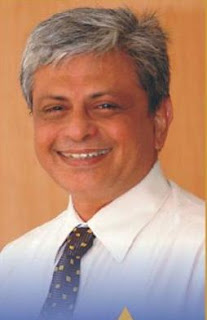
My photo
Bangalore, Karnataka, India
My purpose is to manufacture success and happiness